Market Insights
How to Export Car from Dubai – A Simple and Helpful Guide for 2026

Thinking about how to export car from Dubai and wondering if it’s really worth it? You’re not alone, and this guide walks you through the entire process step by step. Dubai has become a major hub for global car exports, attracting buyers, dealers, and traders from Africa, Asia, Europe, and beyond. With competitive prices, a massive selection of vehicles, and direct access to international shipping routes, the city is considered one of the most practical places to start if you plan to export car from Dubai in 2026.
Many people explore the export car dubai market because vehicles in the UAE are often well maintained, have lower mileage, and come with reliable service records. This makes Dubai a popular source for export-ready cars that can be shipped to international destinations quickly through major ports like Jebel Ali.
Whether you are exporting a single car for personal use or entering the wider UAE car export industry as a business, the process involves clear steps: choosing the right vehicle, preparing documents, deregistering the car, obtaining an export certificate, clearing customs, and arranging transport.
This guide breaks down each stage in a simple, step-by-step format so you can understand exactly how to export car from Dubai confidently, efficiently, and without unnecessary delays.
Why Many Choose to Export Car from Dubai and the UAE

Dubai has become one of the most popular starting points for car exports due to a combination of pricing, availability, and logistics. These advantages attract both individual buyers and professional exporters who are looking for a reliable and efficient way to export car from Dubai to overseas markets.
1. Competitive Pricing Compared to Other Countries
Vehicles in Dubai often sell at lower prices than in many international markets. This is driven by:
- High supply and fast model turnover
- Strong demand for luxury upgrades
- Frequent resale from expat owners
Note: For exporters, this price gap can create profitable resale opportunities abroad.
2. Large Variety of Vehicles in One Market
Dubai offers access to a broad mix of brands and categories in a single location:
- Japanese, European, American, and GCC-spec vehicles
- Economy cars, SUVs, pickups, and luxury models
- Export-focused dealers with ready-to-ship stock
Note: This concentration allows buyers to source vehicles faster without searching across multiple cities or countries.
3. Well-Maintained and Low-Mileage Cars
Many cars in the UAE are:
- Regularly serviced, with dealerships and owners following scheduled maintenance due to hot weather conditions.
- Driven on smooth, high-quality roads, which helps reduce wear on suspension, brakes, and underbody components.
- Often owned for shorter periods, as expats frequently buy and sell cars within a few years, resulting in lower mileage compared to other markets.
Note: This often results in better condition vehicles, which are more attractive in overseas markets.
4. Direct Access to Major Shipping Ports
Dubai’s infrastructure makes global shipping straightforward:
- Proximity to Jebel Ali Port and Port Rashid
- Frequent export routes to Africa, Asia, and Europe
- Established logistics companies specializing in vehicle transport
Note: This reduces shipping time and simplifies export planning.
5. Experienced Dealer and Export Network
Many licensed dealers, especially in markets like Al Aweer Auto Market are familiar with export processes and can assist with:
- Export documentation
- Customs coordination
- Transport and loading arrangements
Note: This support is helpful for both first-time exporters and businesses managing regular shipments.
Where to Find Cars for Export in Dubai

When exporting a vehicle, the first step is sourcing the right car from a trusted location. Dubai offers several reliable channels for anyone planning to export car from Dubai to international markets.
1. Al Aweer Auto Market
Al Aweer Auto Market is Dubai’s largest auto market and a hub for car trading and a popular destination for export buyers. It offers:
- Hundreds of licensed showrooms in one location
- A wide range of export-ready vehicles, including SUVs, pickups, and GCC-spec models
- Dealers experienced in paperwork, customs, and shipping support
- Most dealers can assist with how to export a used car from Dubai
- Competitive pricing due to high supply and turnover
- A dedicated digital platform that helps with browsing and shortlisting remotely
Note: Its concentration of exporters makes it one of the most efficient places to source vehicles for international shipment.
2. Independent Dealerships
Across Dubai, many private dealerships specialize in export sales.
- Stock includes both locally used and imported vehicles
- Some offer pre-inspection reports or RTA passing certificates
- Many are open to bulk purchases and price negotiation
- Dealers may help arrange transport to ports or logistics centers
Note: Always verify the dealer’s trade license and vehicle history before committing.
3. Official Brand Showrooms (Pre-Owned Divisions)
Authorized showrooms such as Toyota, Nissan, Mercedes-Benz, BMW, and others have certified pre-owned departments that sometimes allow export purchases.
- Cars are inspected and serviced to manufacturer standards
- Warranty may be limited or invalid outside the UAE (varies by brand)
- Pricing is typically higher but offers peace of mind regarding condition
Note: Not all brands permit export, so confirmation is required in advance.
4. Auctions
Dubai hosts public and dealer-only auctions that can offer competitive prices.
- Suitable for bulk buyers or traders
- Vehicles are sold “as is,” so inspection is crucial
- Export documentation is usually the buyer’s responsibility
- Bidding rules and deposits may apply
Note: Auctions can be an opportunity, but experience is recommended.
5. Online Platforms
Digital platforms such as Al Aweer Auto Market allow buyers to browse available vehicles before arranging purchase or export in person.
- Convenient for shortlisting options remotely
- Some listings are specifically labeled as export-ready
- Buyers should still verify condition and documents directly with the seller
Note: Online browsing is helpful, but physical inspection remains important for export.
Tip:
For export purchases, always confirm:
- Vehicle specifications required by the destination country (e.g., emissions, left/right-hand drive)
- Whether the destination accepts GCC-spec vehicles
- Availability of export certificates and clearance documents
Documents Required to Export a Car from Dubai
If you plan to export car from Dubai, you might wonder what documents do I need? When exporting a car, proper documentation is essential. Without the correct paperwork, the export process cannot proceed through RTA, customs, or shipping providers. The required documents vary slightly depending on whether the exporter is an individual or a business, but the core requirements are generally the same. Below is your checklist of documents you need to prepare:
1. Vehicle Registration Card (Mulkiya)
This document confirms the car’s legal ownership and contains key details such as:
- Vehicle chassis number (VIN)
- Plate number
- Owner name
- Registration status
Note: If the car is unregistered or recently deregistered, proof of ownership is still required.
2. Passport and Emirates ID (for Individuals)
To export car from Dubai you must show valid identification. If the owner is overseas, a legal representative can handle the export with a notarized Power of Attorney.
3. Trade License (for Companies / Dealers)
Businesses that plan to export car from Dubai multiple vehicles must present:
- Valid UAE trade license
- Authorized company representative documents
Note: Some ports may also request a company stamp on export forms.
4. Export Certificate from RTA
This is one of the most important documents to export car from Dubai. The vehicle must be deregistered in Dubai and converted to “Export Status” before it can leave the UAE. Once issued, the export certificate:
- Confirms vehicle de-registration
- Allows the car to exit the country legally
- Replaces the active registration card
Note: Temporary export plates may be issued if the car needs to be driven to the port.
5. Original License Plates
Plates must usually be returned to the RTA during the export certificate process unless temporary export plates are requested.
6. Vehicle Inspection / Passing Report
If the car is currently registered, an RTA inspection may be required before de-registration or export, depending on the vehicle’s status. This confirms:
- Roadworthiness
- Chassis identity
- No tampering or fraud issues
Note: Some unregistered vehicles may be exempt depending on the export destination and RTA guidelines.
7. Purchase Invoice or Sales Agreement
Required when:
- The vehicle was recently purchased
- Ownership has just changed hands
- A dealer is exporting on behalf of a buyer
Note: It must include the chassis number, seller details, and sale amount.
8. Owner Authorization (If Exporting on Someone’s Behalf)
If the exporter is not the vehicle owner:
- Power of Attorney (POA)
- Authorized company letter (for business-owned vehicles)
Note: May be required by RTA or customs.
Tip:
Make photocopies and digital scans of all documents. Shipping agents and customs offices may request multiple copies during the process.
Step-by-Step Process to Export Car from Dubai
If you plan to export car from Dubai, you might wonder, what do I do, and in what order? This topic involves several official procedures. Completing each step in the correct order helps avoid delays at RTA, customs, or shipping ports. Below is a roadmap and the sequence of actions to follow:
Step 1: Purchase the Vehicle and Confirm Ownership
Before anything else, the car must legally belong to the exporter.
- Complete the sale with the seller or dealer
- Obtain a sales agreement or invoice
- Ensure the chassis (VIN) matches the documents
- Clear any outstanding finance or fines
Important: A car that is still under bank mortgage cannot be exported until the loan is fully settled and released in the RTA system.
Step 2: Clear Any Existing Fines or Violations
RTA will not issue an export certificate if the vehicle has:
- Unpaid traffic fines
- Salik (toll) penalties
- Outstanding violations
Note: These must be settled before de-registration.
Step 3: Vehicle Inspection (If Required)
Depending on the car’s current status:
- Registered vehicles may require an RTA inspection (Passing Test) to confirm identity and chassis integrity.
- Unregistered vehicles may be exempt, depending on export rules and destination country requirements.
Note: Many exporters still choose an inspection for peace of mind and to avoid customs issues abroad.
Step 4: Deregister the Vehicle at RTA
The car must be officially removed from UAE road status. This is done by converting the car’s registration to “Export Status.” During de-registration:
- RTA cancels the registration
- Number plates may be surrendered
- A de-registration record is issued
Note: This step is mandatory before the vehicle can leave the UAE.
Step 5: Obtain the RTA Export Certificate
Once deregistered, you can request an official Export Certificate. This document:
- Confirms the car is cleared for export
- Replaces the active registration card
- Is required by customs and shipping companies
Note: Without this certificate, the vehicle cannot exit the UAE.
Step 6: Apply for Temporary Export Plates (If Needed)
If the vehicle needs to be driven from location to port:
- Temporary plates can be issued for a limited duration
- Insurance may be required depending on the transport method
Note: If the car is being transported by recovery truck, plates may not be necessary.
Step 7: Arrange Transport to the Port
Options include:
- Driving the car (with temporary plates)
- Hiring a recovery truck
- Dealer-arranged transport
- Logistics company collection
Note: Vehicles must be delivered to the designated export yard or port terminal for processing.
Step 8: Complete Customs Clearance
At the port:
- Documents are checked
- Export certificate is verified
- Customs clearance is processed
- Any port handling fees are paid
Note: A shipping agent or logistics provider can assist with paperwork if needed.
Step 9: Confirm Shipping and Final Handover
Depending on the chosen method (Ro-Ro, container, or air freight):
- The car is loaded and secured
- Final shipping documents are issued
- Tracking details may be provided
Note: Once the vehicle departs, the process in Dubai is complete. Taxes or duties in the destination country will apply upon arrival.
Shipping Options and Logistics
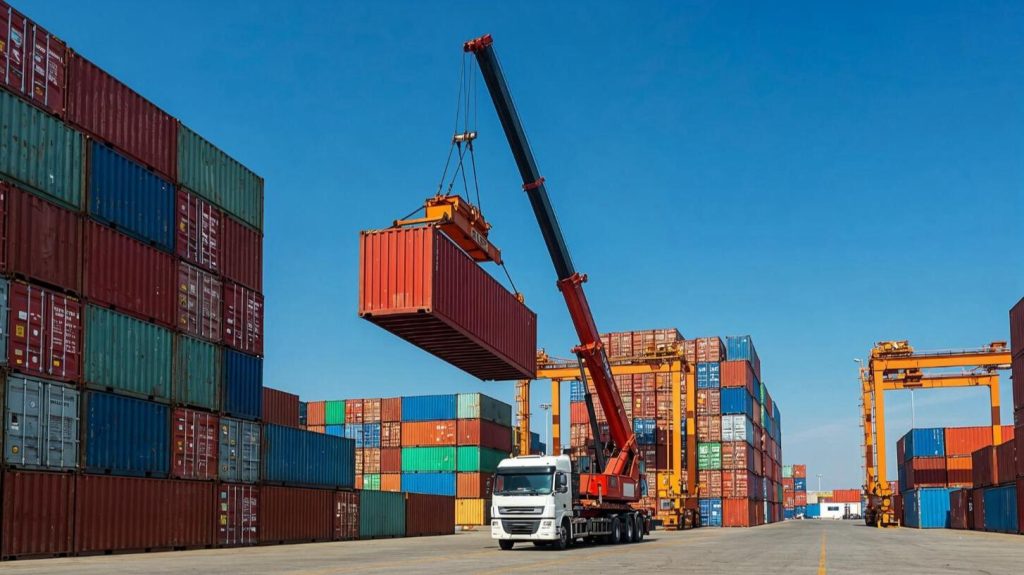
Once a vehicle has been deregistered and cleared for car export from Dubai, the next major step is choosing how to ship it out of Dubai. The UAE offers multiple transport methods, each suited to different budgets, destinations, and vehicle types. Understanding these options helps exporters plan costs, timing, and insurance correctly.
1. Roll-On Roll-Off (RoRo) Shipping
RoRo is one of the most common methods for car export from Dubai.
How it works:
- The vehicle is driven onto a specialized RoRo vessel.
- Secured in place for transport.
- Driven off at the destination port.
Advantages:
- Cost-effective for standard cars.
- Faster loading and unloading.
- Ideal for large volumes or bulk shipments.
Considerations:
- You cannot ship personal items inside the vehicle.
- Only available on routes and ports that support RoRo services.
Best for: Standard vehicles going to major ports in Africa, Asia, and Europe.
2. Container Shipping
In this method, the vehicle is placed inside a sealed container — alone or with other cars.
Advantages:
- High security and protection from weather or damage.
- Allows multiple cars per container (20ft or 40ft).
- Personal items or spare parts may be included (depending on regulations).
Considerations:
- More expensive than RoRo.
- Loading and unloading require additional handling.
Best for: Luxury cars, classic vehicles, high-value exports, or destinations without RoRo access.
3. Air Freight
The fastest but most expensive option.
Advantages:
- Quick delivery — often within days.
- Maximum protection and controlled handling.
- Suitable for urgent shipments.
Considerations:
- Extremely high cost.
- Limited capacity and weight restrictions.
Best for: VIP vehicles, rare cars, motorsport shipments, or urgent deliveries.
4. Land Transport to GCC Countries
For car export from Dubai or the UAE to nearby destinations like Saudi Arabia, Oman, Bahrain, or Kuwait, cars can be transported via road carriers.
Advantages:
- Faster than sea shipping for regional destinations.
- Flexible delivery schedules.
- Can be cost-effective for single-vehicle transport.
Considerations:
- Border customs and insurance requirements vary by country.
- Some countries have specific vehicle regulations (e.g., left-hand drive rules).
Best for: Exports to GCC and nearby regional markets.
5. Choosing a Shipping Agent
Most exporters who plan to export a car from Dubai work with licensed logistics companies that handle:
- Booking vessel space
- Port documentation
- Customs paperwork
- Loading and transport arrangements
- Insurance options
Tip: Always compare quotes from multiple agents and confirm delivery timelines, tracking options, and handling fees.
6. Marine Insurance
While optional, marine insurance is strongly recommended. It typically covers:
- Theft
- Damage during loading/unloading
- Damage in transit
- Loss at sea
Premiums depend on:
- Vehicle value
- Shipping method
- Destination country
Summary
Choosing the right shipping method when you export car from Dubai depends on:
- Budget
- Vehicle value
- Destination port availability
- Urgency
- Security needs
RoRo is often the cheapest way to export a car from Dubai, container shipping offers the best protection, and air freight is the fastest option. Land transport remains ideal for regional GCC exports.
Costs and Fees to Export Car from Dubai

To Export car from Dubai it involves several expenses beyond just the price of the car. Understanding these costs upfront helps avoid surprises and allows exporters to plan their budget more accurately.
While fees can vary based on vehicle type, destination country, and service provider, the list below covers the most common costs involved in the export process.
1. Vehicle Purchase Price
This is the amount paid to the seller, whether a dealership, auction, or private owner.
Factors that influence pricing include:
- Make, model, and year
- Mileage and condition
- GCC vs non-GCC specification
- Market demand in the destination country
For bulk exporters, discounted pricing may be possible.
2. RTA Export Certificate Fee
To legally export car from Dubai, an RTA Export Certificate is required.
Typical cost: Approximately AED 100–200 (Exact fees may vary based on RTA updates.)
This fee is paid during the de-registration process before shipment.
3. Vehicle Inspection Fee (If Required)
Some cars may need an RTA inspection before export, especially if the vehicle is still registered.
Typical cost: Around AED 170–250 (Depends on vehicle type and inspection center.)
Unregistered vehicles may not require inspection in some cases.
4. Number Plate Return / Temporary Export Plates
When exporting a car:
- Standard UAE plates must be returned to RTA.
- Temporary export plates may be issued if the vehicle needs to be driven to the port.
Typical cost for temporary plates: AED 60–120
5. Customs and Clearance Fees
Customs processing fees apply when the vehicle exits the UAE. If a shipping agent handles the process, clearance fees are usually included in their service charge.
Estimated range: AED 300–800 (Varies by port and service provider.)
Import taxes and duties are paid in the destination country, not in Dubai.
6. Shipping Costs
Shipping costs depend on:
- Destination
- Shipping method (RoRo, container, air freight)
- Vehicle size and weight
- Single vs multiple cars
Typical ranges:
- RoRo shipping: AED 1,000–5,000+
- Container shipping: AED 4,000–12,000+ per container
- Air freight: Significantly higher, often AED 30,000+
Rates vary widely and should be confirmed with logistics companies.
7. Loading, Handling, and Port Charges
Ports may charge fees for:
- Loading the vehicle
- Terminal handling
- Storage if the vehicle stays longer than allowed
Estimated range: AED 200–600, depending on duration and port.
8. Marine Insurance (Optional but Recommended)
Insurance protects the vehicle during transport against:
- Damage
- Theft
- Loss
Premiums typically cost 0.5% to 2% of the vehicle value, based on destination and shipping method.
9. Agent or Service Fees (If Using an Export Service)
Export agents or dealers may charge for:
- Document processing
- Customs support
- Port handling
- Shipping coordination
Typical range: AED 300–1,500, depending on services included.
Summary
When you plan to export car from Dubai, total costs usually include:
- Car purchase price
- RTA export fees
- Inspection (if required)
- Shipping costs
- Customs clearing fees
- Optional insurance
- Agent/service charges
Actual costs vary, so exporters should request quotes and confirm fees before committing.
How Long Does Car Export from Dubai Take?
When you export car from Dubai usually follows a predictable timeline, but the total duration can vary depending on paperwork, inspections, and shipping schedules. Here’s a general breakdown of what to expect:
1. Vehicle Purchase and Payment
Timeframe: 1 to 3 days
- Faster if buying directly from a dealer with experience of car export from Dubai
- May take longer if negotiations, inspections, or bank transfers are involved
2. RTA De-registration and Export Certificate
Timeframe: Same day (1 to 3 hours)
- Submit plates, complete paperwork, and obtain the export certificate
- Some cases may require inspection, adding extra time
3. Vehicle Inspection (If Required)
Timeframe: 1 day
- RTA inspection may be needed if the vehicle is still registered or recently purchased
- Bookings and peak hours may affect timing
4. Customs Clearance
Timeframe: 1 to 3 days
- Depends on documentation accuracy and port processing
- Export agents can speed up this step
5. Shipping Wait Time
Timeframe: 7 to 30 days
- Depends on destination and shipping method (Ro-Ro vs. Container)
- Some regions have weekly sailings, others bi-weekly or monthly
Total Estimated Timeline
10 to 40 days from purchase to overseas departure. Faster if:
- Paperwork is prepared in advance
- Using experienced export dealers or agents
- Shipping routes are frequent (e.g., Africa and Asia)
Tips to Avoid Delays
- Double-check all documents before visiting RTA or customs
- Confirm shipping schedules early
- Use licensed export agents for complex destinations
- Keep digital and printed copies of all paperwork
Key Tips and Common Mistakes to Avoid When Exporting a Car from Dubai
When planning to export car from Dubai, it can be straightforward, but small errors can lead to delays, added costs, or even rejected shipments. These practical tips help keep the process smooth and compliant. Below are some key tips for a smooth Dubai car export:
1. Verify Vehicle Specifications
Different countries have rules on:
- Left-hand vs. right-hand drive
- Emission standards
- Engine size limits
- Safety requirements
Note: Always confirm the destination country’s rules before purchasing the car.
2. Check Vehicle History and Condition
Request:
- Service records
- Accident history
- Mileage validation
- RTA passing report (if available)
Note: Better condition = easier resale and fewer export complications.
3. Use Licensed Dealers or Agents
Experienced exporters can:
- Arrange documents
- Handle customs
- Coordinate shipping
Note: This reduces errors and speeds up the process, especially for first-time exporters.
4. Compare Shipping Methods
- Ro-Ro is usually cheaper but may take longer
- Containers offer more security and protection
Note: Choose based on destination, value, and urgency.
5. Keep Multiple Copies of Documents
Carry:
- Printed copies
- Digital scans
- Receipts and invoices
Note: Ports and shipping agents often request duplicates.
Common Mistakes to Avoid
1. Buying a Car That Isn’t Eligible for Export
Not all vehicles are accepted in every country. Some destinations ban:
- Salvage or damaged vehicles
- Flooded or tampered chassis
- Certain fuel types or specs
Note: Failing to check rules early can result in wasted money.
2. Forgetting to Deregister the Vehicle
A car cannot leave the UAE without an RTA export certificate. Skipping this step will stop the shipment at customs.
3. Miscalculating Total Costs
Some exporters forget to factor in:
- Port fees
- Customs charges in the destination country
- Insurance
- Shipping taxes or duties
Note: Always calculate the full cost-to-delivery, not just the UAE price.
4. Not Checking Shipping Schedules
Some routes operate weekly or monthly. Missing a sailing can delay export by weeks.
5. Paying Sellers Without Proper Documentation
Never make full payment without:
- Sales agreement
- Invoice with VIN number
- Proof of ownership
Note: Lack of documentation can block export approval.
Quick Tip:
If you’re exporting multiple cars, consider consolidating them in a single container to reduce shipping costs per vehicle.
Frequently Asked Questions (FAQ)
1. Do I need to be in Dubai to export a car?
No. A trusted representative can handle the process if they have a notarized Power of Attorney and the required documents.
2. Can I export a financed or loaned car?
Not until the loan is fully settled and the bank issues a clearance letter removing the mortgage from the vehicle.
3. Do I need insurance to export car from Dubai?
No. Insurance is not required once the car is deregistered for export. It’s only needed if the car will be driven on UAE roads before export.
4. How long does the process to export car from Dubai take?
If all documents are ready, the RTA export certificate and de0registration can often be completed the same day. Shipping timelines vary by destination.
5. Can I export multiple cars at once?
Yes. Individuals and companies can export multiple vehicles, but each car requires its own export certificate and documentation.
6. Can any car be exported from Dubai?
Most cars can be exported, but the destination country must accept the vehicle’s specifications (for example, left/right-hand drive or emissions rules).
7. Do license plates need to be returned?
Yes. Original UAE plates are usually surrendered during deregistration unless temporary export plates are issued for transport to the port.
8. Can the car be driven after it’s deregistered?
No. It can only be moved with temporary export plates or via transport truck.
Conclusion
Exporting a car from Dubai becomes much easier when you follow the key steps: selecting the right vehicle, preparing the required documents, obtaining the RTA export certificate, and arranging customs and shipping. Thanks to competitive pricing, a wide vehicle selection, and direct access to major shipping ports, Dubai is considered one of the most practical starting points for anyone planning to export car from Dubai to international markets.
For buyers and dealers sourcing export-ready vehicles, the Al Aweer Auto Market digital platform offers a convenient way to browse options, compare cars, and connect with licensed and verified dealers experienced in export procedures, helping streamline the process before visiting in person.
Whether you are exporting a single vehicle or managing regular shipments, having reliable information and trusted partners can make the entire journey faster, smoother, and more secure.
Get Started
Whether you’re buying or selling a car, your online journey starts here.
Sign up or contact our team for support.